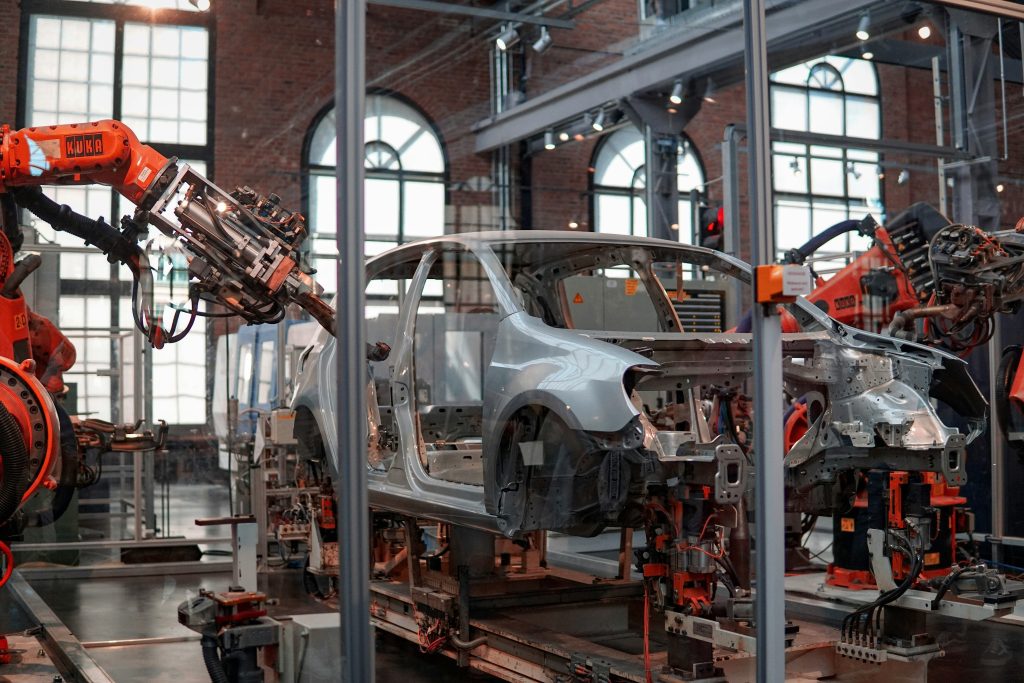


AI slop image generated with Gemini AI
Over the past few weeks, the number of companies cutting down drastically on AI spend has increased. Uber managed to burn $3.4 billion in R&D budget in 4 months [1] without being able to fully justify the return on this investment. Microsoft canned the use of Claude AI [2] due to rising costs and Walmart capped the AI budgets per employee [3]. After a wild period with sky-high promises and valuations, the economic reality is catching up very quickly.
To the moon
Over the past two years, the sky was the limit for AI companies with grotesque and dramatic predictions. CEOs of some of these companies made claims such as “half of entry level white collar workers could be eliminated in two years” [4] and that AI will be able to “cure cancer” [5]. Mark Zuckerberg had the brilliant idea of making a data centre the size of Manhattan [6] after burning $80 billion on the Metaverse flop. Elon Musk also boarded the hype train considering launching AI data centres into space [7]. The ridiculousness reached its peak with “tokenmaxxing” [8]. This term refers to pushing workers to use as much AI as possible and tracking this with leaderboards. The introduction of this simplistic metric led to developers gaming the system by querying AI tools using gibberish prompts.
Big promises with very limited return
After committing billions of dollars towards the development of LLM’s, investors will want to see some return. So far, the real world results are disappointing as illustrated in the KPMG Global AI Pulse report over Q1 2026. Only 8% of AI projects show significant ROI.[9]. Thousands of skilled IT workers were laid off under the narrative of increasing productivity with AI. Gartner researched the companies that laid off workers under this narrative and came to the conclusion that they were not more successful than peers that did not cut the workforce with AI as a justification [10].
A simple example of an AI system failure was observed at Starbucks. An AI inventory system was not able to count the number of bottles and hallucinated the results [11]. A very simple task which a sophisticated AI system was not able to do correctly.
Meanwhile, customers are questioning the increasing AI bills they are receiving. In the Dutch Financial Times, the CEO of Mews illustrated that one employee used €1,000, – of tokens in a day [12] on a feature that would have otherwise taken a team some months. The value, however, is not always clear. He openly admits that you can spend money on “stupid stuff”. Bottom-line: he had to increase the AI budget to €10 million. In the same article the AI lead of tech giant Prosus says that the rising costs will soon become unsustainable. He also points out that the token consumption of AI agents is much higher than a simple chatbot leading to a quicker rise in expenditure.
LLM commoditization
With AI spend now clearly in the sights of the finance department, it makes sense that organisations become more critical about how budgets are spent and on which model.
The cost of the latest Opus 4.8 model is $25 per million output tokens [13]. OpenAI charges $30 per million output tokens for GPT 5.5 [14]. Meanwhile, DeepSeek charges $0.87 per million tokens on the latest v4-pro model [15] and Mistral Medium 3.5 charges $7.5 per million output tokens [16].
The models from Open AI and Claude are outperforming these competitors, but they are not far ahead. One could also argue: Does OpenAI justify the up to factor 30 cost compared to a cheaper model? It leads to an interesting shift where LLM technology is moving towards becoming a commodity where you have more choice. An increasing factor involving these decisions will be the costs, as none of these models can guarantee their outcomes. In other words: spending more does not solve the hallucination problem; it will reduce it at best. The consequence of the increased competition is that the default choice may no longer be OpenAI or Anthropic.
Rise of local AI
The other route which is becoming increasingly popular is hosting your own LLM model. Apple, long considered a laggard in the AI world, has meanwhile developed very suitable chip architecture for AI development and use. The OpenClaw hype led to the Mac Mini computer being sold out [17] and it is just a mere glimpse of what will be possible in the future. Nvidia is also jumping on the bandwagon by announcing the RTX-Spark chip on Computex 2026 suitable for running AI models locally [18]. The hardware industry is clearly signalling a new direction for AI hardware which is more focussed on local inference.
The two trends illustrated above place a ticking time bomb under the earning capabilities of the AI companies which have placed big bets on the AI hyperscaler infrastructure. On the one side customers are tightening AI budgets impacting revenues and valuations. On the other side, there are significant hardware advancements which simply make the current hyperscaler infrastructure less attractive and possibly unsustainable in the long run.
It looks like the AI tokens have come to roost.
Sources
[1] https://finance.yahoo.com/markets/stocks/articles/uber-caps-ai-spending-investors-021342125.html
[4] https://www.cnbc.com/2026/01/27/dario-amodei-warns-ai-cause-unusually-painful-disruption-jobs.html
[5] https://blog.samaltman.com/abundant-intelligence
[6] https://www.yahoo.com/news/articles/mark-zuckerbergs-plan-data-center-001000288.html
[7] https://www.bbc.com/news/articles/cyv5l24mrjmo
[8] https://www.businessinsider.com/tokenmaxxing-debate-uber-exec-viral-ai-costs-2026-5
[9] https://kpmg.com/xx/en/our-insights/ai-and-technology/ai-pulse.html
[11] https://www.techspot.com/news/112524-starbucks-tried-using-ai-count-syrup-bottles-kept.html
[13] https://platform.claude.com/docs/en/about-claude/pricing
[14] https://openai.com/api/pricing/
[15] https://api-docs.deepseek.com/quick_start/pricing
[16] https://mistral.ai/pricing/#api
[18] https://www.nvidia.com/en-us/geforce/news/computex-2026-nvidia-geforce-rtx-announcements/